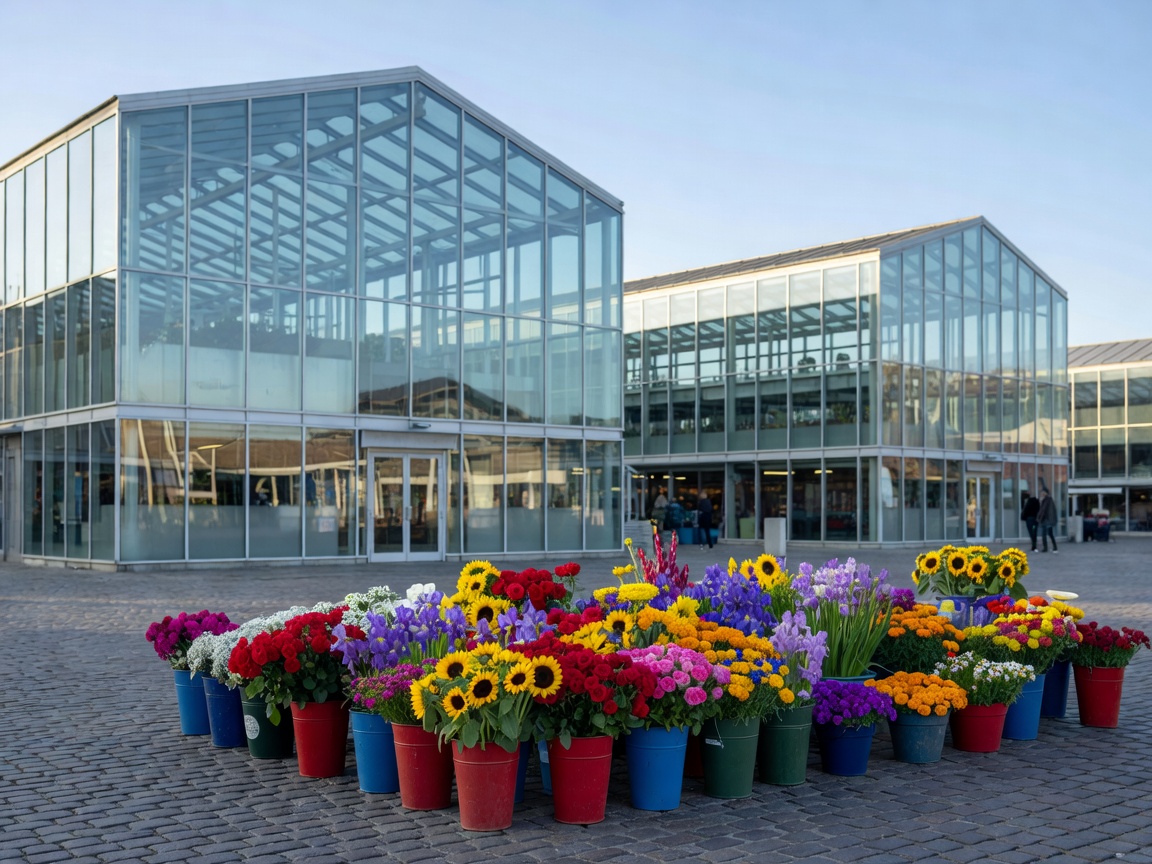
Situated directly adjacent to Nørreport Station, TorvehallerneKBH serves as the modern communal pantry and botanical center of inner Copenhagen. While the twin glass pavilions are renowned across Europe for artisan cheeses, fresh seafood, and smørrebrød, the cobble-paved courtyard linking the two structures transforms daily into a dense, fragrant open-air flower market.
Atmosphere and Architectural Setting
The marketplace occupies the historic site of the city’s 19th-century vegetable market. Designed by architect Hans Peter Hagens and opened in 2011, the architecture pairs industrial iron and glass with warm cedar wood. Between Hall 1 and Hall 2, market traders unpack galvanized zinc buckets overflowing with stems delivered early in the morning from regional greenhouses across Zealand and auctions in Funen.
Visitors encounter an open corridor flanked by blooms arranged by color spectrum rather than rigid botanical genus. The contrast between raw cobblestone and fragile petals creates a quintessential Scandinavian ambiance where market-goers on cargo bicycles pause alongside neighborhood apartment dwellers picking up weekly kitchen centerpieces.
What to Look For: Stems and Living Displays
While selection shifts with the seasonal calendar, several persistent categories define the Torvehallerne flower corridor:
- Cold-Climate Cut Bulbs: From early February through late April, Dutch and Danish tulips appear with bulb roots still attached to extend vase longevity. Double-flowered and parrot cultivars sit alongside understated paperwhites and dark grape hyacinths.
- Wild Forest Botanicals: Bundles of lichen-covered birch twigs, forced cherry branches, rowan berry boughs, and potted bog moss for container gardens.
- Potted Balcony Flora: Robust hellebores in late winter, scented pelargoniums in early summer, and frost-tolerant ornamental kales during late autumn.
- Dried Herbaceous Stems: Teasels, sea lavender, bleached poppy seed heads, and un-dyed strawflowers curated for sculptural ceramic vessels.
Visitor Logistics & Purchasing Etiquette
Traders operate outdoor stalls from approximately 10:00 to 18:00 on weekdays, opening around 10:00 to 17:00 on weekends. Cash is rarely handled; payment cards and mobile pay are standard. When selecting fragile stems, it is customary to ask the vendor before pulling bouquets from deep zinc display buckets to prevent broken heads.
Comparative Overview: Buying at Market vs. Traditional Florist
| Feature | Torvehallerne Open Stalls | Independent Ateliers |
|---|---|---|
| Arrangement Style | Loose bunches, single-variety bunches, self-bundling | Complex bespoke hand-tied bouquets |
| Stem Longevity | Direct daily market deliveries, high turnover | Conditioned stems, tailored preservative care |
| Price Structure | Mid-tier, bundled discounts for multi-stem buys | Higher-tier, reflecting floral artistry fees |
| Vessel Selection | Standard zinc, terracotta pots, basic glass | Artisan Nordic studio ceramics and studio glassware |
Surrounding Botanical Highlights
Visiting Torvehallerne provides an ideal stepping-off point for exploring adjacent green spaces. A three-minute stroll west leads into the University of Copenhagen Botanical Garden (Botanisk Have), home to historic Victorian palm houses and native Danish woodland plantings. This proximity allows visitors to observe living taxonomic specimens before examining how regional growers translate those species into cut market offerings.