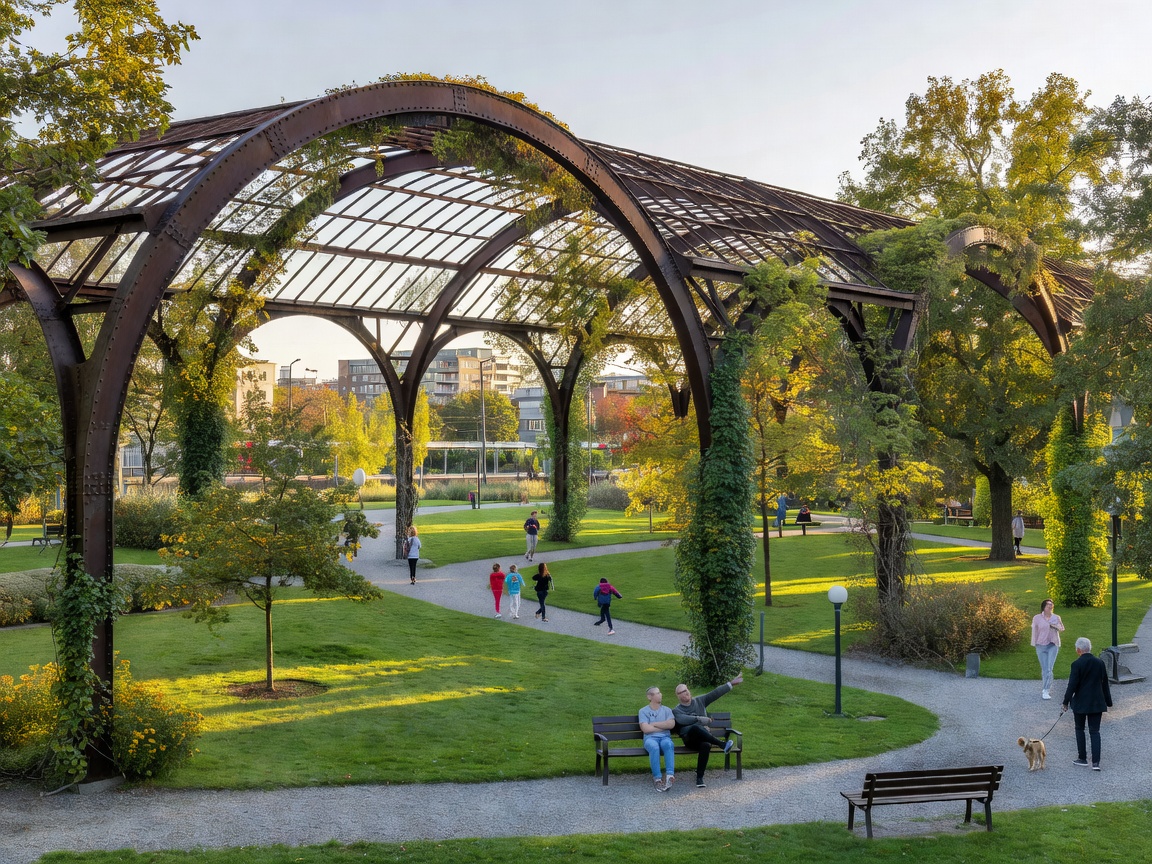
For more than half a century, the heartbeat of commercial horticulture in eastern Denmark was centered at Grønttorvet in the Valby district of southwest Copenhagen. Opening in 1958 to replace the overcrowded inner-city markets of Israels Plads, the 17-hectare industrial complex served as the primary wholesale distribution terminal for growers bringing field flowers, greenhouse plants, and fresh produce to the capital.
The Wholesale Era (1958 – 2016)
During its peak operating decades, trading at Grønttorvet began well before sunrise. Between 03:00 and 07:00, florists, independent shop owners, and street vendors navigated towering steel-framed halls stacked high with wooden crates. Danish nursery owners from Amager and Zealand negotiated bulk orders of potted geraniums, cut tulips, and seasonal foliage before loading vans to stock neighborhood storefronts across Copenhagen, Frederiksberg, and Malmö.
However, as logistical patterns shifted toward direct supply chain networks and regional consolidation, wholesale trade moved in 2016 to modern suburban logistics centers in Høje Taastrup (Copenhagen Markets). This relocation left the historic Valby site open for one of the most ambitious botanical urban redevelopment projects in Scandinavia.
Architectural Transformation: The Grønttorvsparken Masterplan
Rather than demolishing the industrial legacy, city planners and landscape architects anchored the new neighborhood around botanical identity. At the geometric center of the new residential quarter lies Grønttorvsparken, a sprawling 23,000-square-meter public green space designed to celebrate the horticultural trade that defined the grounds.
Central to this preservation is the skeleton of the historic trading hall: a monumental steel-framed greenhouse structure preserved as an open-air public pavilion. Known locally as the 'Væksthuset' (The Greenhouse), it provides sheltered community gardening plots, seasonal botanical exhibitions, and communal long-table dinners surrounded by climbing wisteria, espaliered fruit trees, and perennial flowering beds.
Urban Biodiversity & Fruit Tree Lineage
The landscape architecture of contemporary Grønttorvet integrates more than 500 fruit-bearing trees—apples, pears, plums, and cherries—selected to reflect heritage Danish orchards. Fruit is publicly harvestable by residents and visitors, fostering an active relationship with living agricultural botany within urban city limits.
Comparing Historic Wholesale with Contemporary District Botany
| Dimension | Historic Grønttorvet (1958–2016) | Contemporary Grønttorvet (Present) |
|---|---|---|
| Primary Function | Industrial wholesale logistics and trade | Public botanical living, community gardens |
| Access Type | Restricted to licensed commercial trade buyers | Fully public municipal park and pedestrian paths |
| Plant Varieties | High-volume commercial cut flowers & produce | Perennial meadow species, heritage fruit orchards |
| Water Infrastructure | Industrial runoff storm drains | Visible bioswales, rain gardens, and retention ponds |
Visiting Grønttorvet Today
Travelers interested in sustainable urbanism and horticultural history can easily reach Grønttorvet via Vigerslev Allé or Ny Ellebjerg (København Syd) stations. Walking through the district reveals subtle architectural nods to its floral heritage: residential buildings named after regional flora (such as Hortensia Hus, Iris Hus, and Amaryllis Hus) and integrated rooftop greenhouses that maintain year-round microclimates for community propagation.