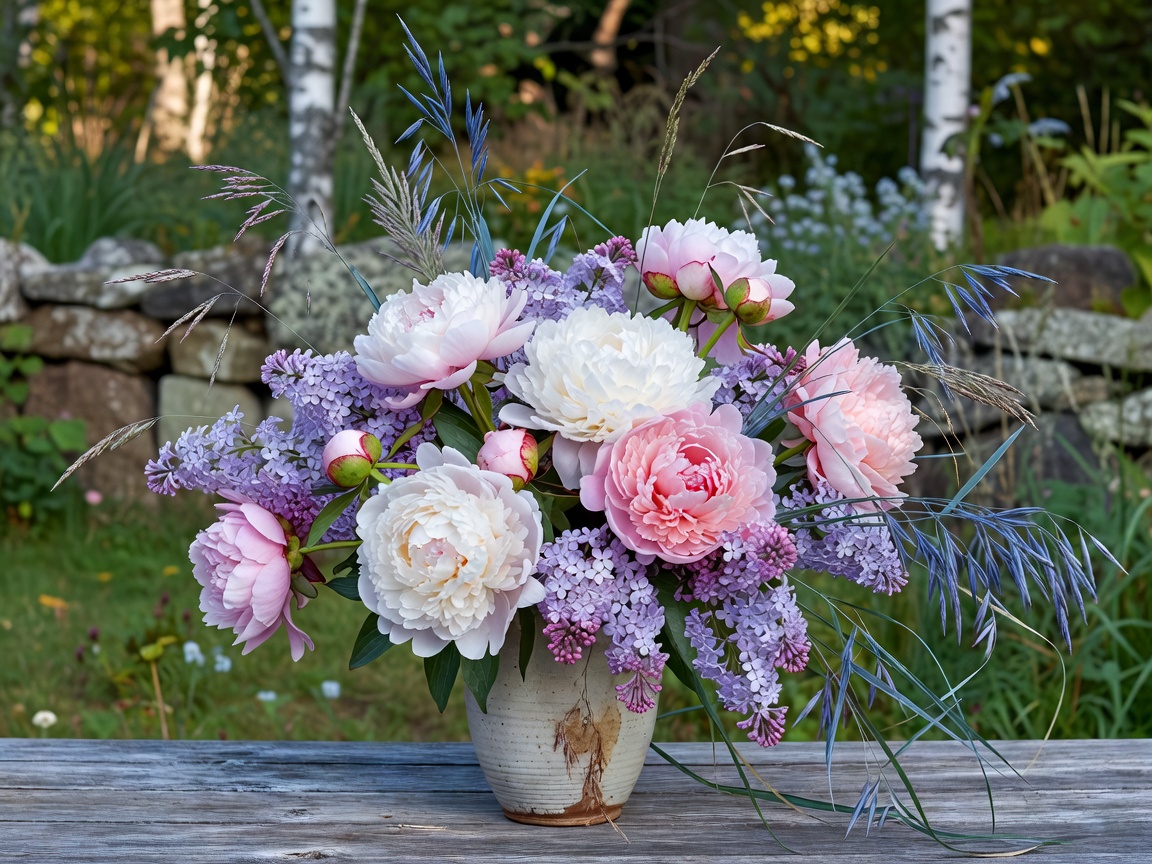
Denmark’s high latitude creates pronounced seasonal light differentials. The contrast between short, dim winter days and seventeen-hour midsummer sunlight drives rapid, dramatic shifts in cut flower availability. Understanding this botanical rhythm is essential for florists, travelers, and event designers seeking field-grown local stems.
Spring: The Awakening of Bulbs & Forced Woody Stems (March – May)
Spring floristry in Copenhagen commences well before frost clears the ground. Commercial growers take advantage of unheated cold frames to produce early bulbs that retain tight buds and cool root freshness:
- March: Snowdrops (Galanthus), winter aconite, hazel catkins, forced birch twigs displaying tender chartreuse leaf buds.
- April: Narcissus varieties (poet’s daffodils), anemones, crown imperials, and early grape hyacinths. Outdoor stalls stack dozens of tulip cultivars.
- May: Fragrant lilacs (Syringa), bleeding hearts (Lamprocapnos), lily of the valley, and flowering dogwood branches.
Summer: Meadow Abundance & Field Blooms (June – August)
During the Scandinavian summer, flower production shifts entirely to open-air Zealand fields. High daytime light intensity accelerates stem elongation and saturated color development:
- June: Heritage garden roses, bearded irises, sweet peas (Lathyrus odoratus), and fragrant peonies.
- July: Delphiniums, scabiosa, cornflowers, chamomile, and wild pasture grasses. This is the peak period for loose 'wild meadow' field-tied hand bouquets.
- August: Early dahlias, cosmos, sunflowers, echinacea, and ripening oats used for sculptural grain work.
Autumn: Architectural Seed Heads & Saturated Tones (September – November)
As cooling night temperatures slow growth, the color palette deepens toward rich rusts, deep corals, and golden ambers:
- September: Peak outdoor dahlia season, Japanese anemones, sedum, and ornamental grasses bearing plume-like seed heads.
- October: Rose hips, rowan berries, spindle branches, and late-harvest chrysanthemums grown in historic greenhouse cold frames.
- November: Structural seed heads of poppies, teasels, dried hydrangea heads, and honesty (Lunaria) pods.
Winter: Evergreen Architecture & Forcing (December – February)
Winter floristry focuses on resilience and subtle indoor vitality. The market atmosphere is dominated by evergreen foliage, structural winter berries, and early indoor bulb forcing:
- December: Noble fir, Scots pine boughs, juniper branches, mistletoe, and amaryllis stems conditioned in heavy glass cylinders.
- January – February: Potted indoor hyacinths, Christmas roses (Helleborus), and forced flowering quince branches.
Field vs. Heated Glasshouse Impact
Opting for true field-grown stems between May and October reduces energy footprints drastically compared to heated off-season greenhouse specimens imported from southern hubs. Look for the Danish regional grower labels (Dansk Gartneri) at market stalls.
Comprehensive Seasonality Matrix
| Botanical Category | Peak Availability | Optimal Vase Longevity | Recommended Conditioning |
|---|---|---|---|
| Bulb Flowers (Tulips, Iris) | Feb – May | 5 – 8 Days | Cold shallow water, re-cut straight |
| Woody Branches (Lilac, Birch) | Mar – May | 7 – 12 Days | Vertical split at base, warm initial water |
| Field Meadow (Scabiosa, Cosmos) | Jun – Aug | 4 – 7 Days | Strip bottom foliage, cool overnight rest |
| Tuber Stems (Dahlias) | Aug – Oct | 5 – 9 Days | Daily water changes, avoid direct sunlight |
| Structural Berries (Rowan, Rose hip) | Sep – Nov | 14 – 21 Days | Remove dry leaves, sturdy ceramic vessel |